김현욱 원장, D.D.S. · 늘 웃는 치과 · 2026년 10월Hyun Wook Kim, D.D.S. · O Smile Dentistry · October 2026
여러 개의 치아를 잃으셨을 때 가장 많이 받는 질문이 "어떤 틀니가 나에게 맞을까요?"입니다. 세 가지 방법의 차이를 알면 선택이 훨씬 쉬워집니다.
1.전체 틀니: 치아가 모두 없을 때
잇몸 위에 얹어 쓰는 틀니입니다. 수술 없이 비교적 짧은 기간에 만들 수 있다는 것이 가장 큰 장점입니다.
다만 잇몸에 얹혀 있기 때문에 단단하거나 질긴 음식을 씹을 때 움직일 수 있고, 처음에는 발음과 씹기에 익숙해지는 시간이 필요합니다.
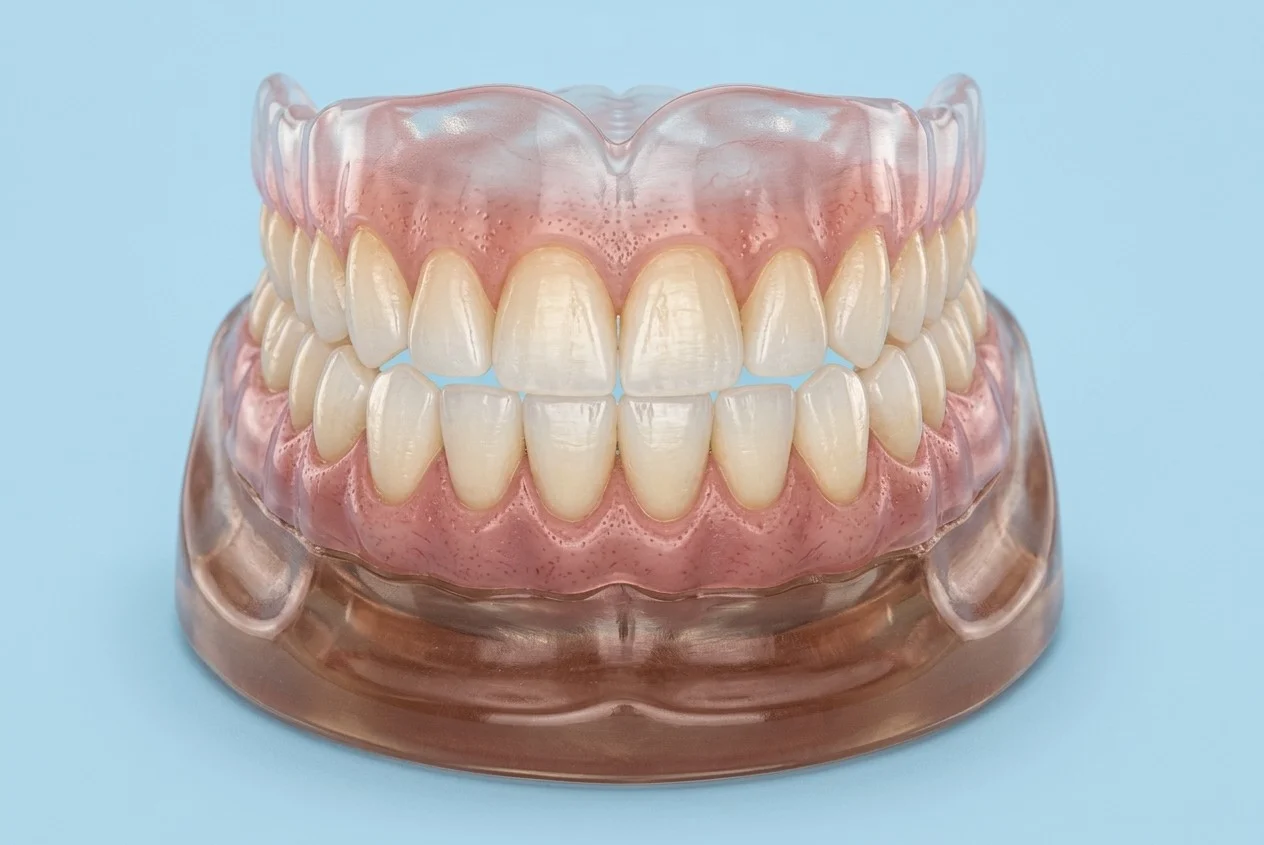
위아래 전체 틀니
2.부분틀니: 남은 치아가 있을 때
남아 있는 치아에 작은 고리를 걸어 고정하는 틀니입니다. 빼서 씻을 수 있고, 여러 군데 빈 곳을 한 번에 채울 수 있습니다.
고리를 거는 치아에 힘이 실리기 때문에, 그 치아의 충치와 잇몸 관리가 특히 중요합니다.
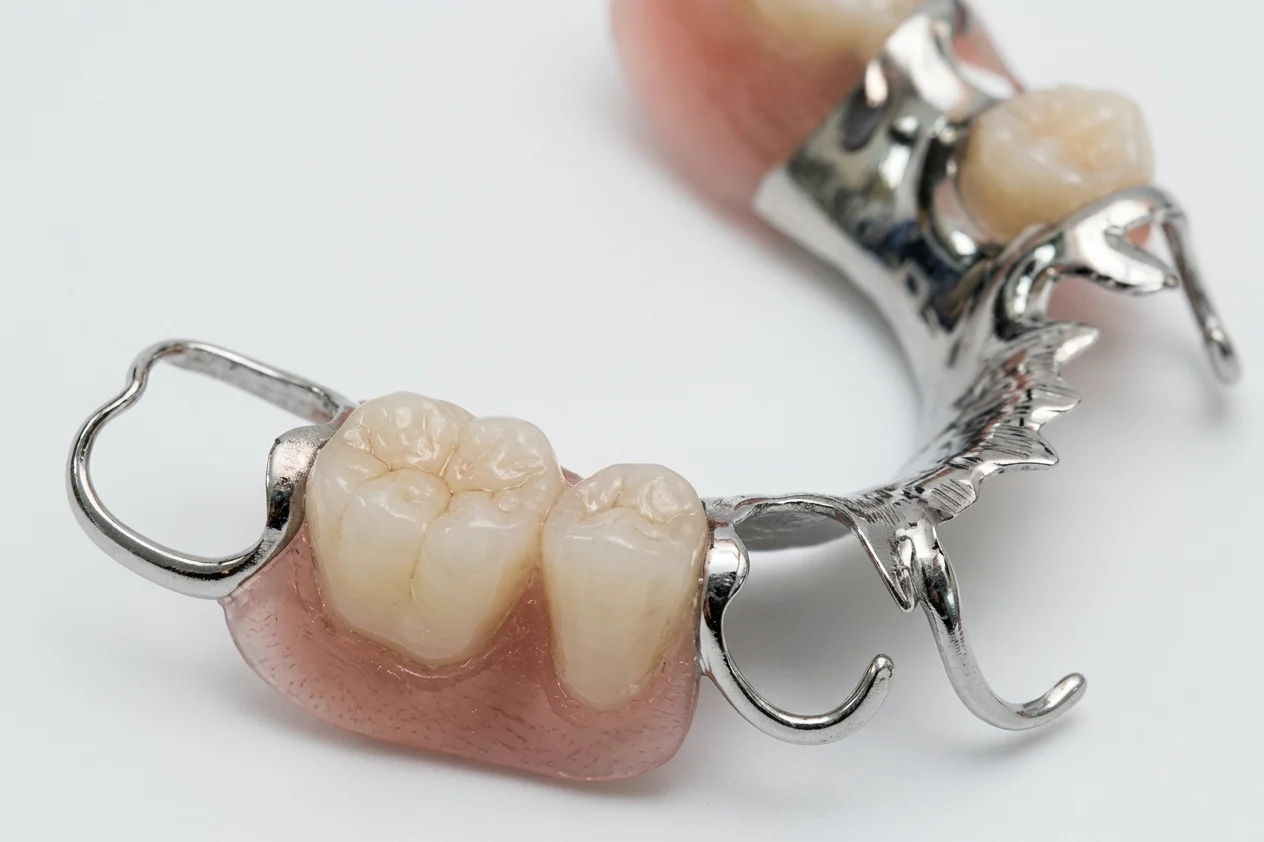
금속 고리로 남은 치아에 거는 부분틀니
3.임플란트 틀니: 그 중간의 선택
임플란트를 몇 개 심고, 그 위에 틀니를 똑딱 끼워 고정하는 방식입니다. 일반 틀니보다 훨씬 덜 움직여 씹기가 편하고, 빼서 세척하는 익숙한 방식은 그대로입니다.
모든 치아를 임플란트로 하는 것보다 심는 개수가 적어 부담이 덜합니다. 다만 임플란트를 심을 만큼의 뼈가 있는지 먼저 확인해야 합니다.
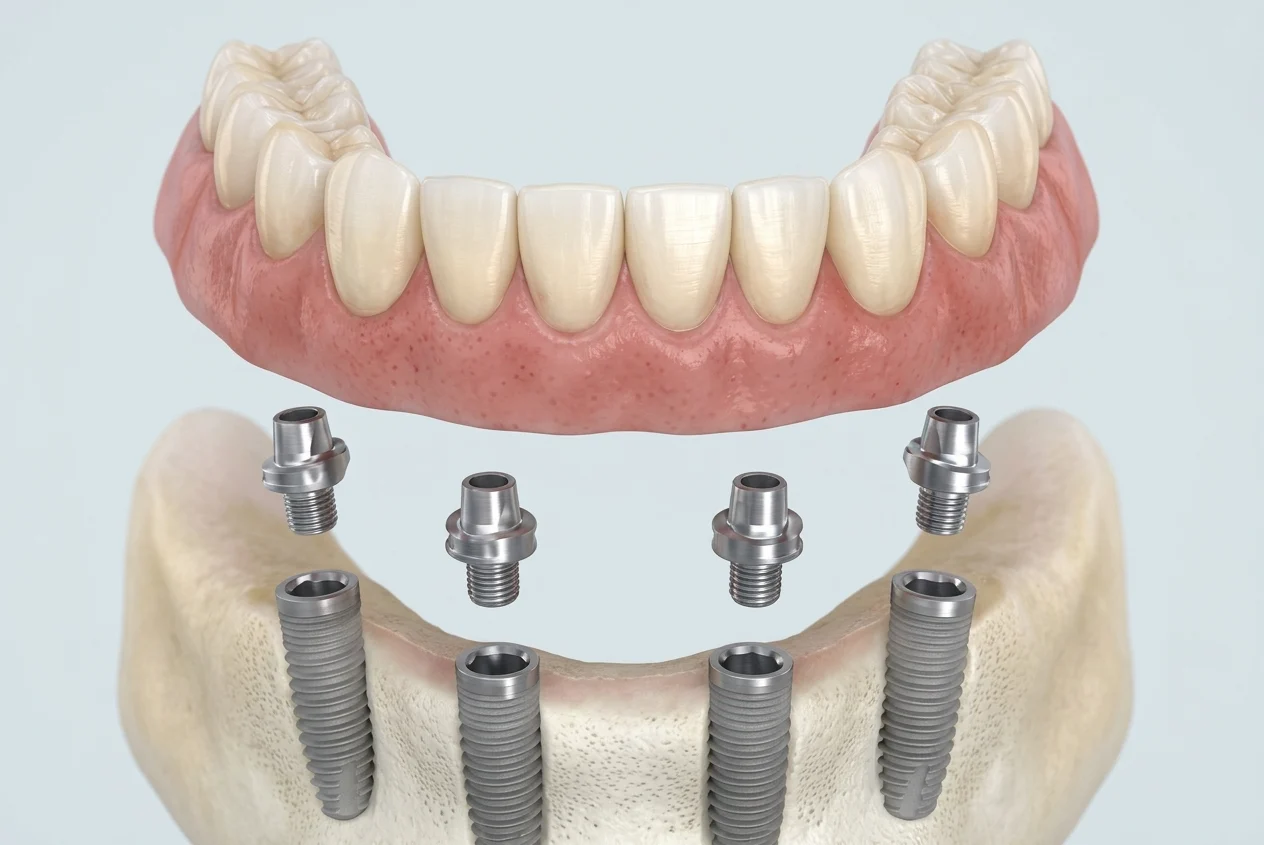
턱뼈에 심은 임플란트 위에 틀니를 고정합니다
4.오래 쓴 틀니가 헐거워지는 이유
치아가 빠진 자리의 뼈와 잇몸은 시간이 지나며 조금씩 줄어듭니다. 그래서 처음에 잘 맞던 틀니도 점점 헐거워지고, 아픈 곳이 생기기도 합니다.
헐거운 틀니를 그대로 쓰시면 잇몸에 상처가 나기 쉽습니다. 정기적으로 점검하고, 필요하면 안쪽을 다시 맞추거나 새로 만드는 것이 좋습니다.
5.어떤 방법이 맞을까요?
남은 치아와 뼈의 상태, 전신 건강, 생활 방식과 예산에 따라 답이 다릅니다. CT로 뼈 상태를 확인한 뒤, 각 방법의 장단점을 비교해 드립니다.
자주 묻는 질문
새 틀니에 적응하려면 얼마나 걸리나요?
사람마다 다르지만 보통 몇 주 정도 걸립니다. 처음에는 발음과 씹기가 어색할 수 있고, 눌려서 아픈 곳은 조정해 드립니다.
잘 때도 틀니를 끼고 있어야 하나요?
대부분은 밤에 틀니를 빼서 잇몸을 쉬게 하고, 세척해 물에 보관하시기를 권합니다. 상황에 따라 다를 수 있어 맞춤으로 안내해 드립니다.
지금 쓰는 틀니를 임플란트 틀니로 바꿀 수 있나요?
뼈 상태에 따라 가능합니다. CT로 확인한 뒤 가능 여부와 방법을 안내해 드립니다.
틀니는 어떻게 닦아야 하나요?
매일 빼서 틀니 전용 솔과 세정제로 닦아 주세요. 일반 치약은 표면을 긁을 수 있습니다. 뜨거운 물은 모양을 변형시킬 수 있어 피해 주세요.
When several teeth are missing, the most common question is, “Which kind of denture is right for me?” Knowing how the three options differ makes the choice much easier.
1.Full dentures: when all teeth are missing
A full denture rests on the gums. Its biggest advantage is that it can be made without surgery in a relatively short time.
Because it rests on the gums, it can move when you chew hard or chewy foods, and it takes some time to get used to speaking and eating with it.
Upper and lower full dentures
2.Partial dentures: when some teeth remain
A partial denture holds on to your remaining teeth with small clasps. It is removable and can fill several gaps at once.
The clasped teeth carry extra load, so keeping those teeth and gums healthy is especially important.
A partial denture with metal clasps that hold onto remaining teeth
3.Implant-supported dentures: a middle option
A few implants are placed, and the denture snaps onto them. It moves far less than a regular denture, making chewing easier, while you can still take it out to clean it.
It needs fewer implants than replacing every tooth with an implant. We first check that there is enough bone to place them.
The denture attaches to implants placed in the jawbone
4.Why older dentures get loose
The bone and gums where teeth were lost slowly shrink over time. A denture that once fit well gradually becomes loose and can cause sore spots.
A loose denture can irritate the gums. Regular checkups help, and when needed the denture can be relined or remade.
5.Which option is right for you?
It depends on your remaining teeth, bone, overall health, lifestyle, and budget. After checking your bone with a CT scan, we compare the pros and cons of each option with you.
Frequently asked questions
How long does it take to get used to new dentures?
It varies, but usually a few weeks. Speaking and chewing may feel unusual at first, and we adjust any sore spots.
Should I wear my dentures while sleeping?
In most cases we recommend taking them out at night to rest the gums, cleaning them, and storing them in water. We will give you advice for your situation.
Can my current denture be changed to an implant denture?
It may be possible depending on your bone. We check with a CT scan and explain the options.
How should I clean my dentures?
Take them out daily and clean them with a denture brush and cleanser. Regular toothpaste can scratch the surface, and hot water can warp the shape.
내 상태에 맞는 치료가 궁금하세요?Wondering what is right for you?
검사 후 선택지별 장단점을 한국어로 쉽게 설명해 드립니다.After an exam, we explain each option clearly, in English or Korean.