김현욱 원장, D.D.S. · 늘 웃는 치과 · 2026년 10월Hyun Wook Kim, D.D.S. · O Smile Dentistry · October 2026
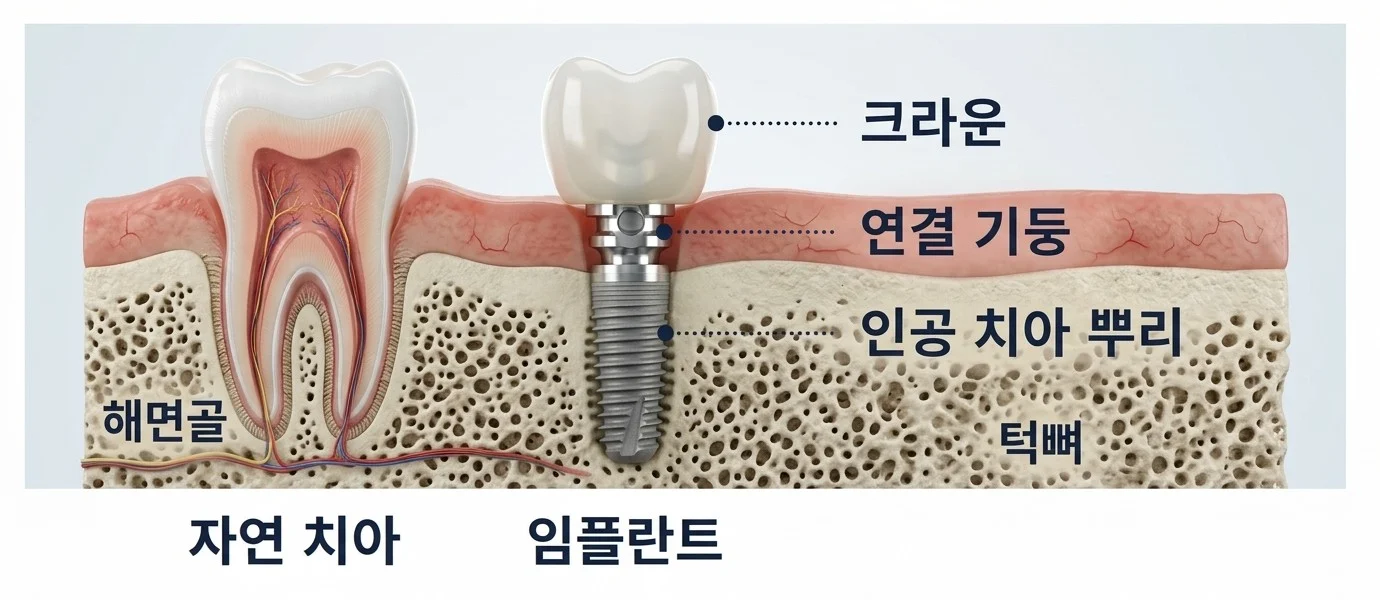
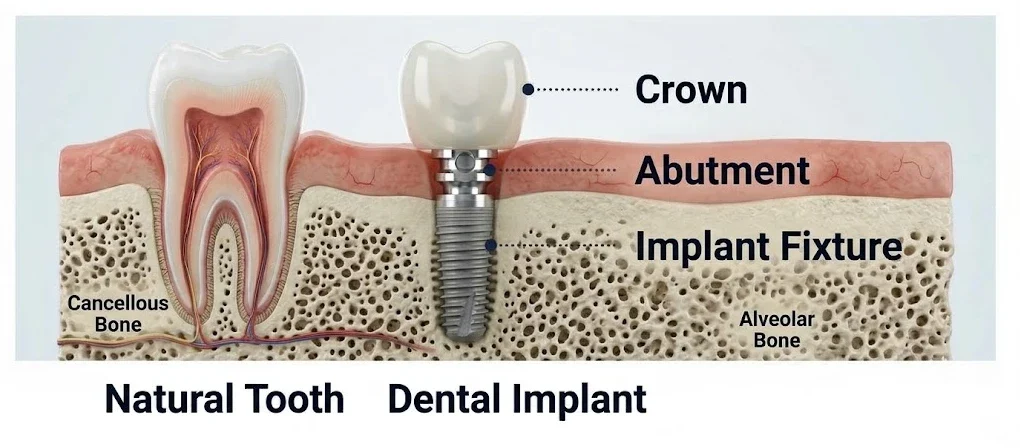
자연 치아(왼쪽)와 임플란트(오른쪽). 임플란트는 크라운, 연결 기둥, 인공 치아 뿌리 세 부분으로 되어 있습니다.A natural tooth (left) and a dental implant (right). An implant has three parts: the crown, the abutment, and the implant fixture placed in the jawbone.
치아를 잃은 자리에 인공 치아 뿌리를 심고, 그 위에 새 치아를 올리는 치료입니다. 잘 계획하면 자연 치아에 가깝게 씹고 웃을 수 있습니다. 상담실에서 자주 드리는 설명을 그대로 정리했습니다.
1.임플란트는 세 부분으로 되어 있습니다
턱뼈에 심는 인공 치아 뿌리(픽스처), 그 위를 잇는 연결 기둥(지대주), 그리고 눈에 보이는 치아(크라운)입니다. 뿌리가 뼈와 단단히 붙기 때문에, 잇몸 위에 얹는 틀니보다 흔들림 없이 씹을 수 있습니다.
옆 치아를 깎지 않아도 된다는 점도 브릿지와 비교했을 때의 장점입니다.
2.빠진 자리를 오래 비워 두면 생기는 일
빈자리 쪽으로 옆 치아가 기울고, 위아래로 맞물리던 치아가 빈 곳으로 내려옵니다. 치아가 빠진 자리의 뼈는 시간이 지나며 조금씩 줄어듭니다.
뼈가 많이 줄면 나중에 임플란트를 하실 때 뼈이식 같은 과정이 더 필요할 수 있습니다. 그래서 너무 늦지 않게 계획을 세우시는 것이 좋습니다.
3.정밀 진단이 먼저입니다
임플란트의 결과는 시술 전 진단에서 크게 갈립니다. CT로 뼈의 높이와 폭, 신경과 상악동(위턱 빈 공간)의 위치를 입체로 확인하고, 구강 스캐너로 입안을 디지털로 본떠 심을 위치와 방향을 계획합니다.
당뇨, 골다공증 약, 혈액을 묽게 하는 약처럼 전신 건강도 함께 확인합니다. 드시는 약이 있으면 상담 때 꼭 알려 주세요.
4.치료는 이렇게 진행됩니다
상담과 검사CT와 구강 검진으로 가능 여부와 선택지를 설명해 드립니다.
임플란트 심기마취 후 계획한 위치에 인공 뿌리를 심습니다.
뼈와 붙는 기간보통 몇 개월이 걸리며, 뼈 상태에 따라 다릅니다. 이 기간에도 일상생활은 하실 수 있습니다.
새 치아 올리기구강 스캐너로 본을 떠 맞춤 치아를 제작해 연결합니다.
정기 검진오래 쓰시도록 잇몸과 맞물림을 정기적으로 점검합니다.
5.오래 쓰려면 관리가 중요합니다
임플란트는 충치는 생기지 않지만, 주변 잇몸에 염증이 생길 수 있습니다(임플란트 주위염). 칫솔질과 함께 치간칫솔·치실을 쓰시고, 정기 검진을 받으시면 오래 편하게 쓰실 수 있습니다.
흡연은 뼈와 잇몸 회복을 늦추고 염증 위험을 높이므로, 치료 기간에는 특히 피하시는 것이 좋습니다.
자주 묻는 질문
나이가 많아도 임플란트를 할 수 있나요?
나이보다 잇몸과 뼈, 전신 건강 상태가 더 중요합니다. 연세가 있으셔도 검사 결과에 따라 충분히 가능한 경우가 많습니다. CT와 건강 상태를 확인한 뒤 안전한 방법을 안내해 드립니다.
수술할 때 많이 아픈가요?
마취를 하고 진행하므로 시술 중 통증은 크지 않은 편입니다. 이후 며칠간 붓거나 불편할 수 있으며, 처방해 드리는 약으로 대부분 조절됩니다.
치료 기간은 얼마나 걸리나요?
뼈 상태와 심는 위치에 따라 다르지만, 보통 몇 개월에 걸쳐 진행됩니다. 정확한 일정은 검사 후 말씀드립니다.
보험이 적용되나요?
플랜마다 적용 범위가 다릅니다. 예약하실 때 보험 정보를 알려 주시면 확인을 도와드립니다.
An implant replaces a missing tooth with an artificial root and a new tooth on top. With careful planning, you can chew and smile much like you did with your natural teeth. Here is what I usually explain in a consultation.
1.An implant has three parts
An artificial root (fixture) placed in the jawbone, a connector (abutment), and the visible tooth (crown). Because the root bonds to the bone, it stays steady when you chew, unlike a denture that rests on the gums.
Unlike a bridge, it also does not require reshaping the neighboring teeth.
2.What happens when a gap is left open
Neighboring teeth tend to tilt into the space, and the opposing tooth can drift toward it. The bone where the tooth was lost also slowly shrinks.
When a lot of bone is lost, an implant may later need extra steps such as bone grafting. That is why it helps to plan before too much time passes.
3.Careful diagnosis comes first
Much of an implant’s success is decided before treatment begins. CT imaging shows the height and width of the bone and the position of nerves and sinuses in 3D, and an intraoral scanner creates a digital model to plan the position and angle.
We also review your overall health, including diabetes, osteoporosis medication, and blood thinners. Please tell us about any medications you take.
4.How treatment works
Consultation and imagingA CT scan and exam tell us whether an implant is right for you and what your options are.
Placing the implantWith local anesthesia, the artificial root is placed in the planned position.
HealingBonding with the bone usually takes a few months, depending on bone quality. You can go about daily life during this time.
Attaching the new toothA custom crown is made from a digital scan and attached.
Regular checkupsWe check the gums and bite regularly so the implant lasts.
5.Care makes it last
Implants cannot get cavities, but the gums around them can become inflamed (peri-implantitis). Brushing plus interdental brushes or floss, along with regular checkups, keeps them comfortable for many years.
Smoking slows healing and raises the risk of inflammation, so it is best avoided, especially during treatment.
Frequently asked questions
Am I too old for an implant?
Gum, bone, and overall health matter more than age. Many older patients are good candidates. We check your CT scan and health history and recommend a safe approach.
Does the surgery hurt?
Treatment is done under local anesthesia, so discomfort during the procedure is usually mild. You may have some swelling or soreness for a few days, which is usually managed with prescribed medication.
How long does it take?
It depends on bone condition and location, but treatment usually takes a few months. We will give you a timeline after your exam.
Does insurance cover implants?
Coverage varies by plan. Share your insurance information when you book and we will help you check.
내 상태에 맞는 치료가 궁금하세요?Wondering what is right for you?
검사 후 선택지별 장단점을 한국어로 쉽게 설명해 드립니다.After an exam, we explain each option clearly, in English or Korean.